After visiting Oriskany, I decided to take a short side trip to Fort Stanwix. It’s a little ironic that I would regard Stanwix as the side trip since there’s a lot more there, and historically speaking, the battle at Oriskany was an outgrowth of the siege at Fort Stanwix.
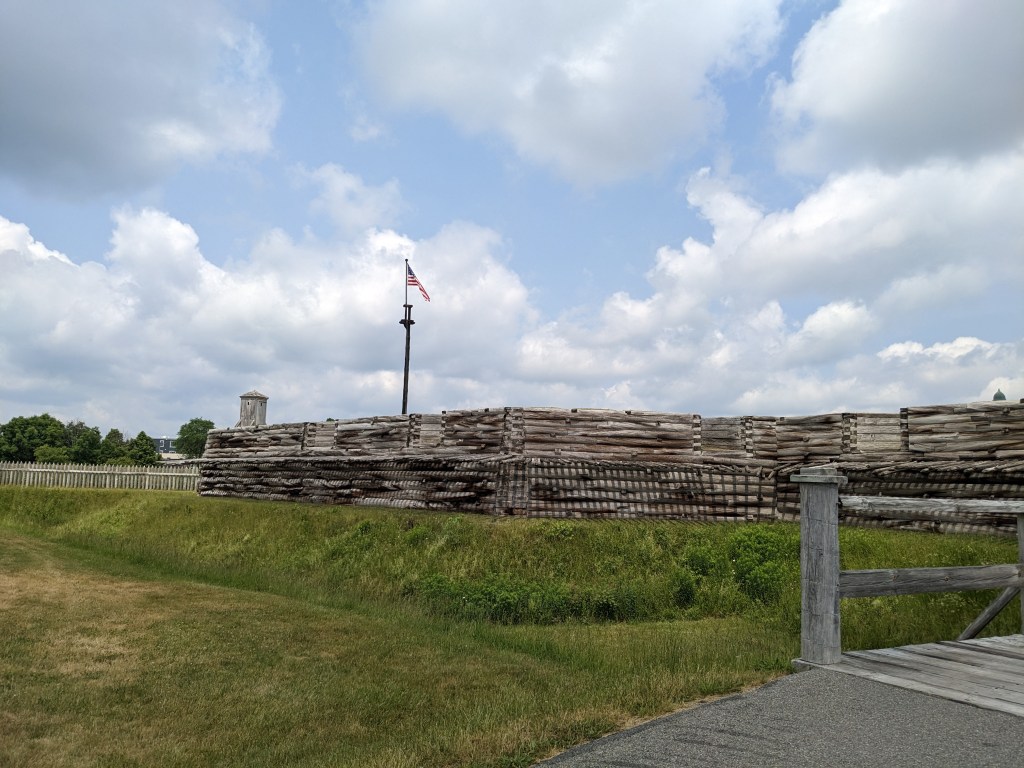
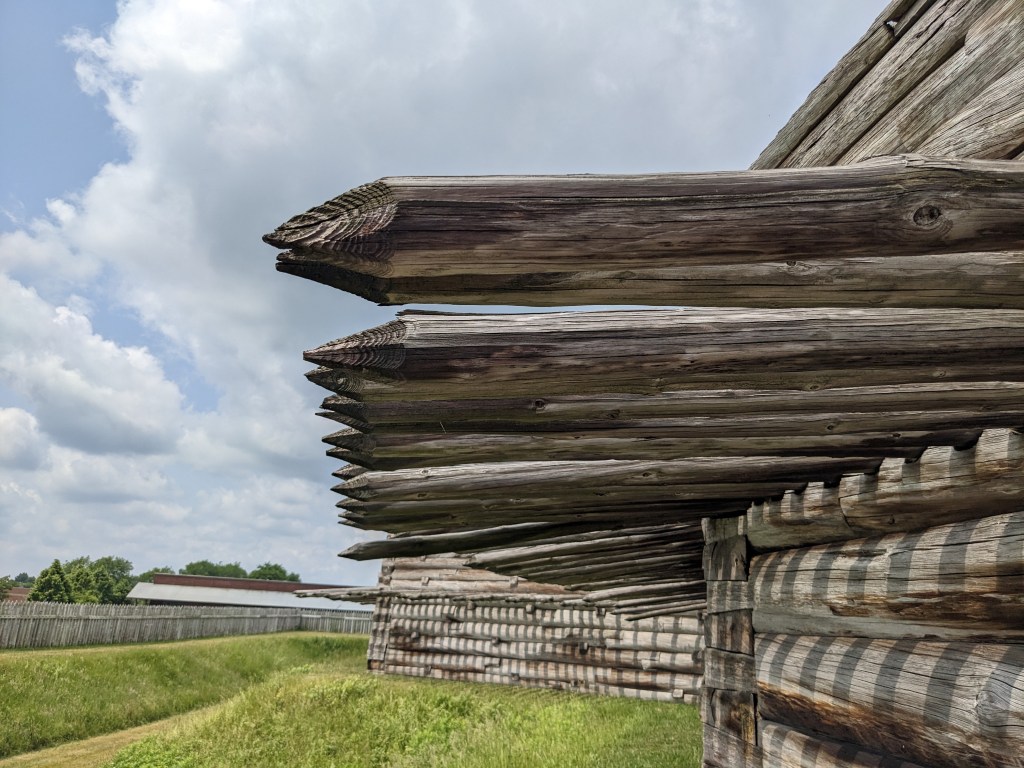
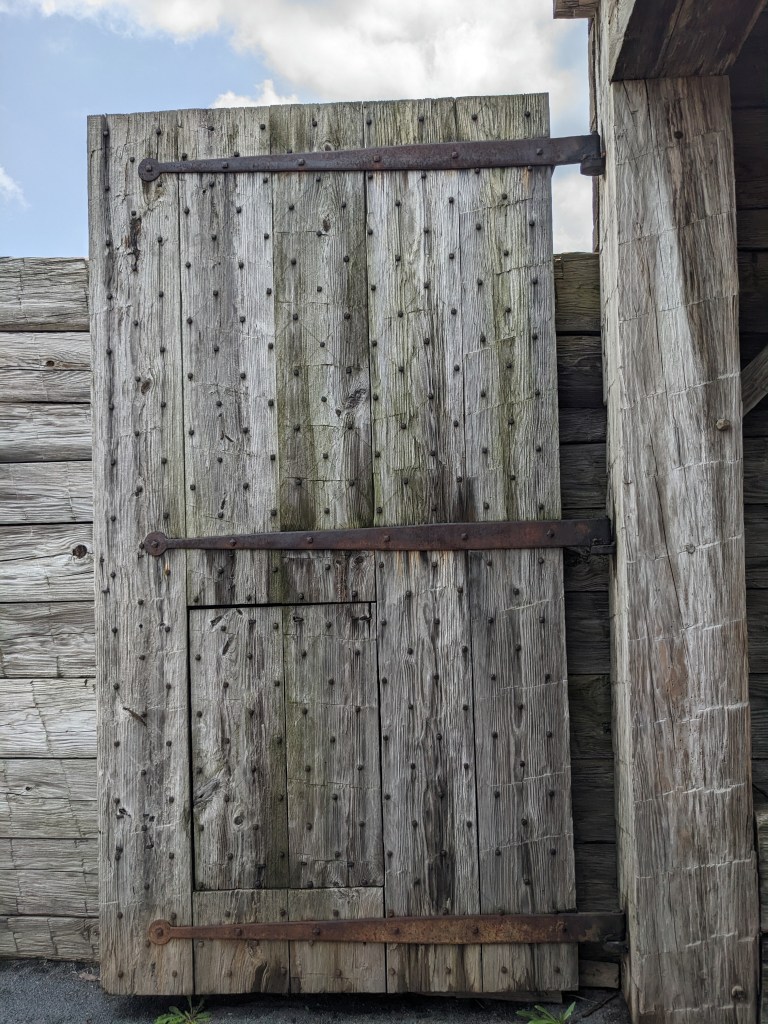
The fort is in the middle of the city of Rome, New York. It’s a bit of a jarring sight to see a preserved 18th Century wooden fort surrounded by a 21st Century urban area. Other than that, the facility looks great and is well-maintained. The visitor’s center does a good job of setting out the complex cultural, economic, political, geographic, and military factors that were at play in the Mohawk Valley during the period prior to the American Revolution and during the war itself. (That’s a nice fig leaf for people like me who go to these places under the guise of learning something, when we’re really just there to see cannons and cool Lincoln-Loggy structures.)
From the National Park Service:
For thousands of years the ancient trail that connects the Mohawk River and Wood Creek served as a vital link for people traveling between the Atlantic Ocean and Lake Ontario. Travelers used this well-worn route through Oneida Indian territory to carry trade goods and news, as well as diseases, to others far away. When Europeans arrived they called this trail the Oneida Carrying Place and inaugurated a significant period in American history–a period when nations fought for control of not only the Oneida Carrying Place, but the Mohawk Valley, the homelands of the Six Nations Confederacy, and the rich resources of North America as well. In this struggle Fort Stanwix would play a vital role.
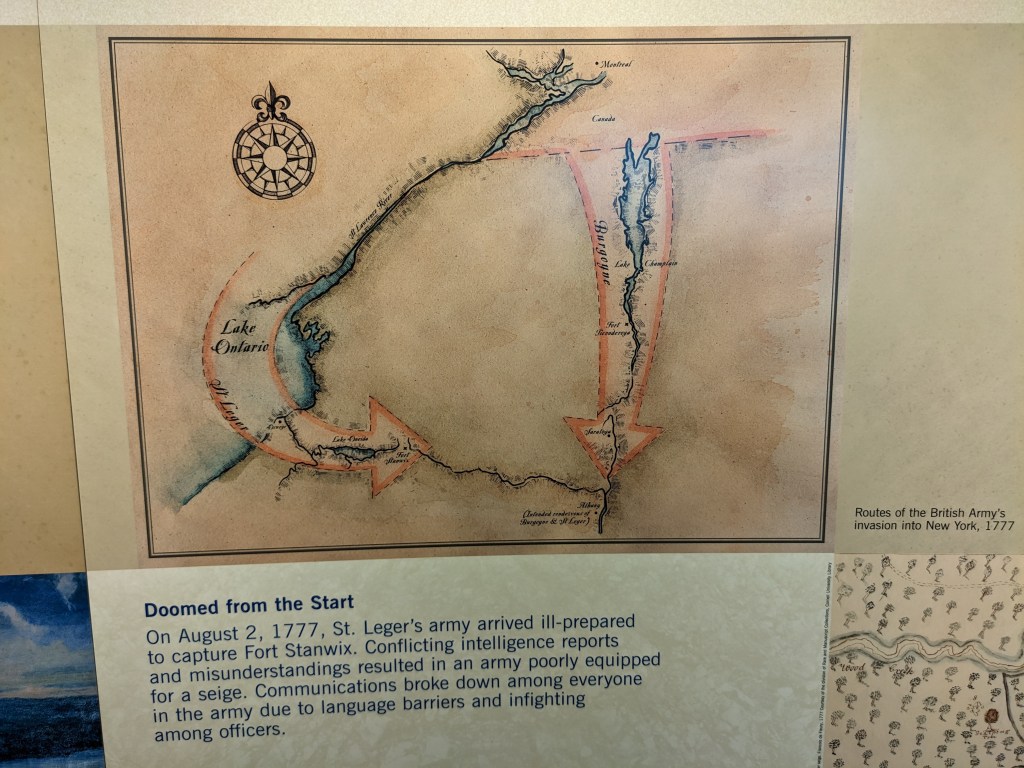
Known as “the fort that never surrendered,” Fort Stanwix, under the command of Col. Peter Gansevoort, successfully repelled a prolonged siege, in August 1777, by British, German, Loyalist, Canadian, and American Indian troops and warriors commanded by British Gen. Barry St. Leger. The failed siege combined with the battles at Oriskany, Bennington, and Saratoga thwarted a coordinated effort by the British in 1777, under the leadership of Gen. John Burgoyne, to take the northern colonies, and led to American alliances with France and the Netherlands. Troops from Fort Stanwix also participated in the 1779 Clinton-Sullivan Campaign and protected America’s northwest frontier from British campaigns until finally being abandoned in 1781.
History & Culture – Fort Stanwix National Monument (U.S. National Park Service) (nps.gov)







 a.k.a. V.J.
Leave a comment