Anyone who has spent time in Oswego, New York is very familiar with Fort Ontario. It is a centerpiece of the area’s history, having played a role in the French & Indian War, the American Revolution, the War of 1812, and even World War II.
What is less known, even among many long-time locals, is that Fort Ontario was just one three forts that existed in Oswego, and not even the largest of those. The main fort, located on the west side of the river’s mouth was called Fort Oswego (this is a bit confusing since in later periods, Fort Ontario was sometimes referred to by that name). There was also a smaller outwork called Fort George.
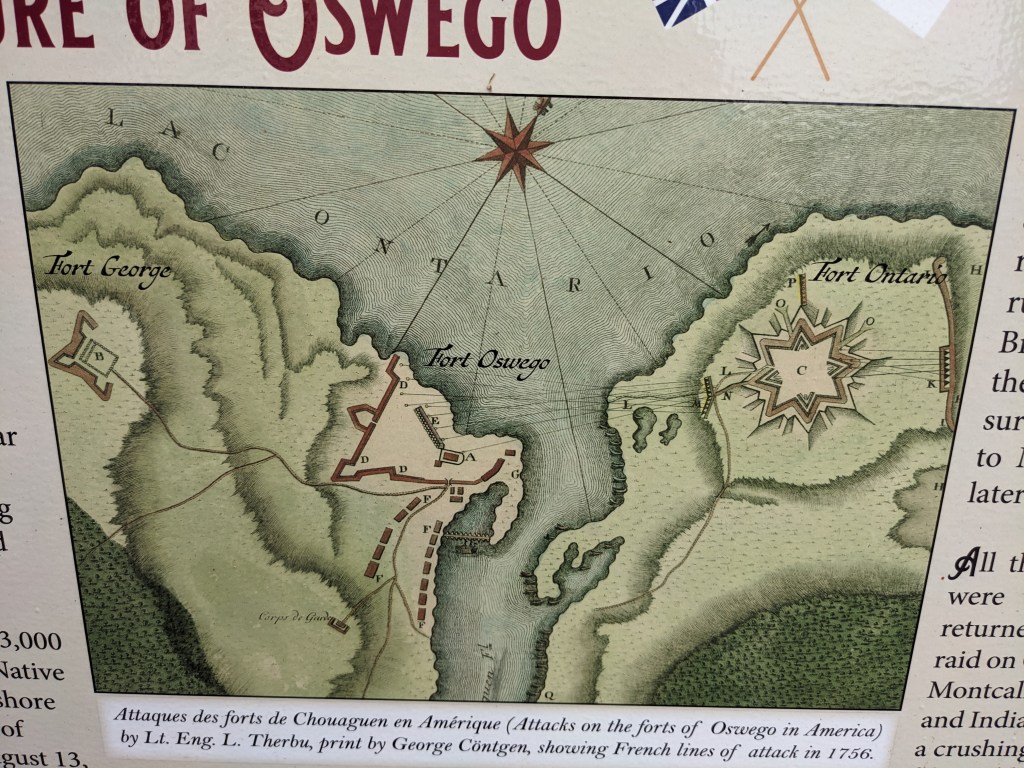
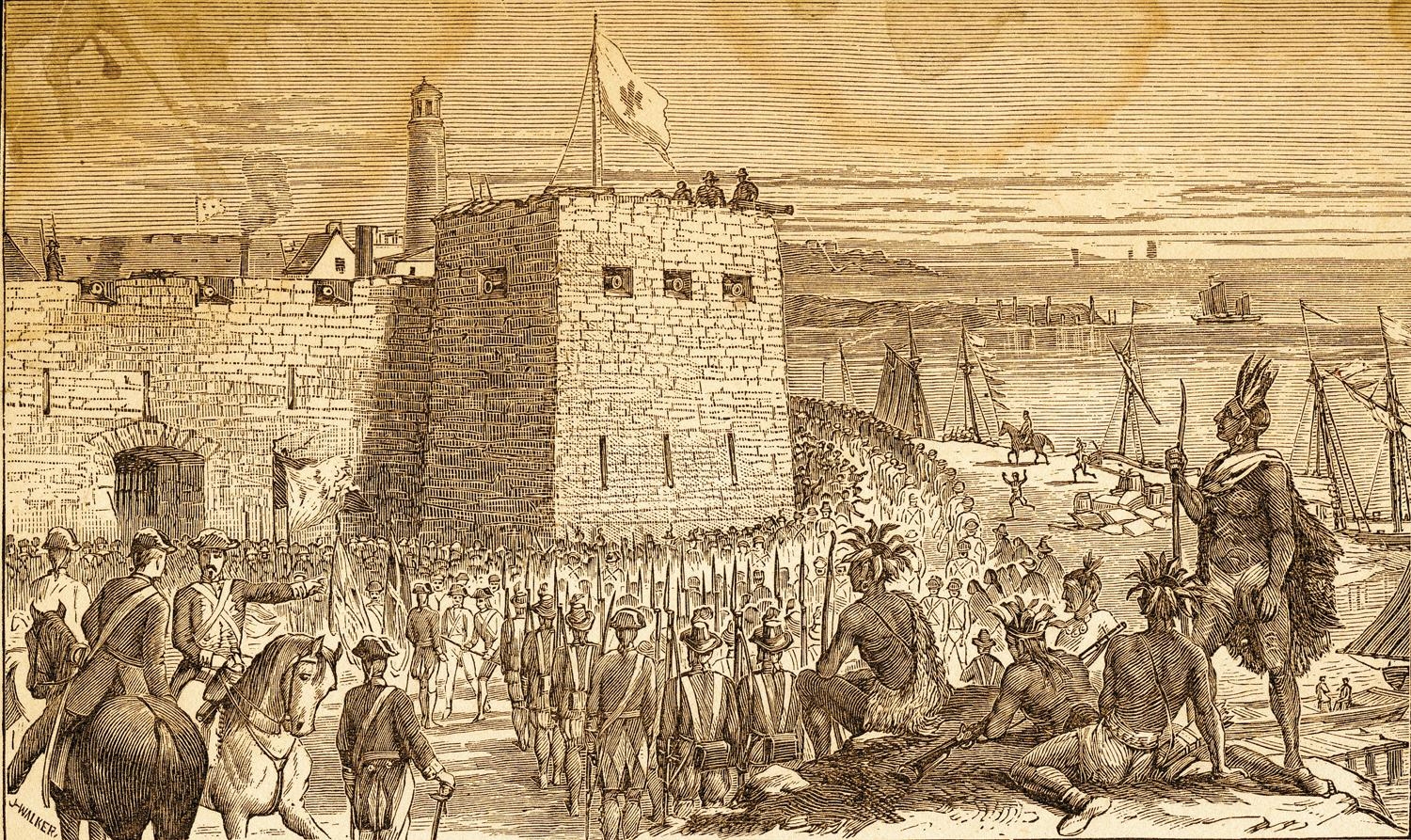

From Wikipedia:
The complex of defenses at Oswego consisted of three separate forts. On the east side of the Oswego River lay Fort Ontario, a log fortification which was constructed in 1755, was sited on a rise overlooking the mouth of the river. It was garrisoned by 370 men from Pepperrell’s Regiment, and was in fairly good repair. Fort Oswego was on the west side of the river, and had a central structure of stone and clay surrounded by earthworks to the south and west, but fully exposed to Fort Ontario, across the river. A recently constructed Fort George (called “Fort Rascal” by one of Shirley’s Regiment, which occupied Fort Oswego) consisted of an incomplete wooden palisade fort that lacked even loopholes through which defenders could fire, and was occupied by 150 New Jersey militiamen. The latter two forts did not have very much shelter for the occupying garrison, and there were only a few cannon for the entire complex of defenses.
Battle of Fort Oswego – Wikipedia
Side note: I lived for a few years in Worcester County, Massachusetts, not far from the towns of Pepperell, Mass., and Shirley, Mass. I didn’t realize at the time that those places were named for men who had connections to Oswego.
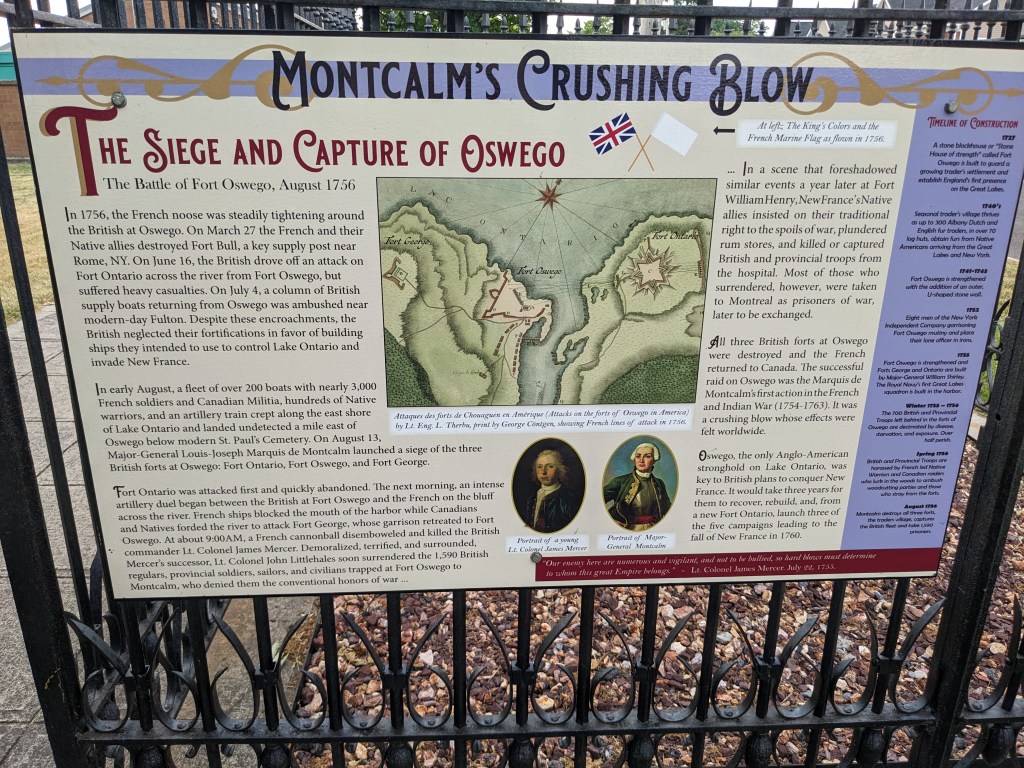
The three forts were all part of the Battle of Fort Oswego in 1756. During this battle, troops under the command of French General Louis-Joseph de Montcalm attacked, captured the fortifications and 121 cannons, took 1,700 prisoners, plundered British supplies including rum stores that they drank on the spot, then eventually burned down all the forts and left. (This would by no means be the last time in history that large groups of people from out of town would come into Oswego, get drunk, and cause property damage.)
Fort Ontario was ultimately rebuilt and stands proudly to this day. All that is left of Forts Oswego and George are modest monuments marking their former locations. On June 11, I visited these markers and snapped a few photos.
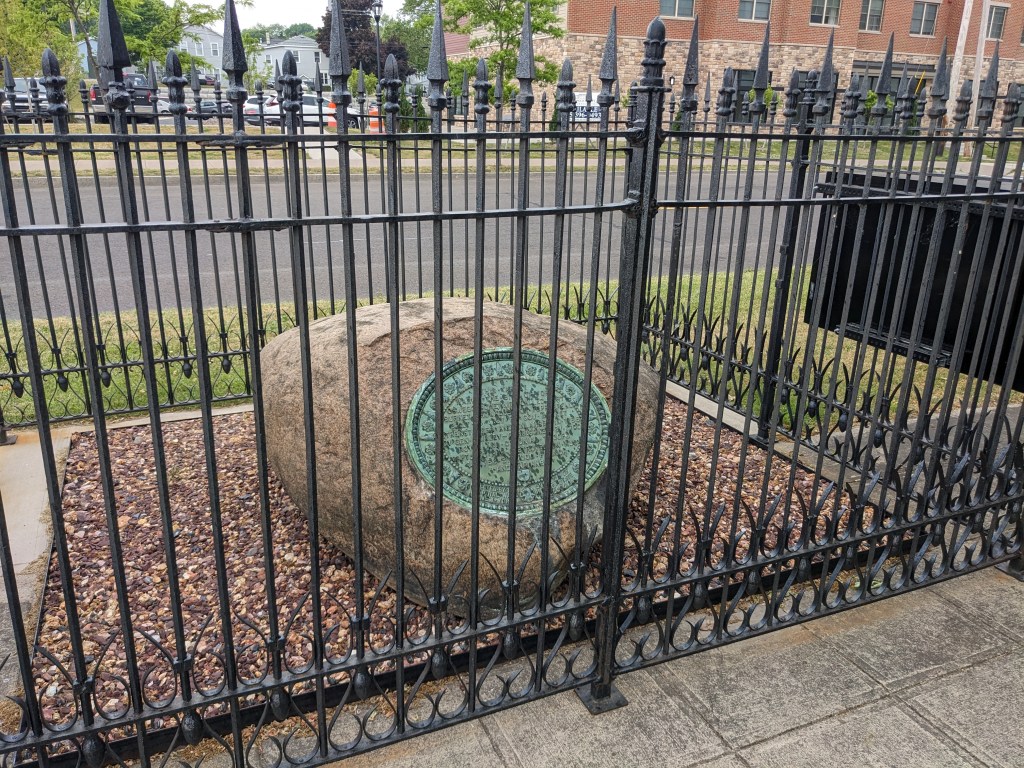
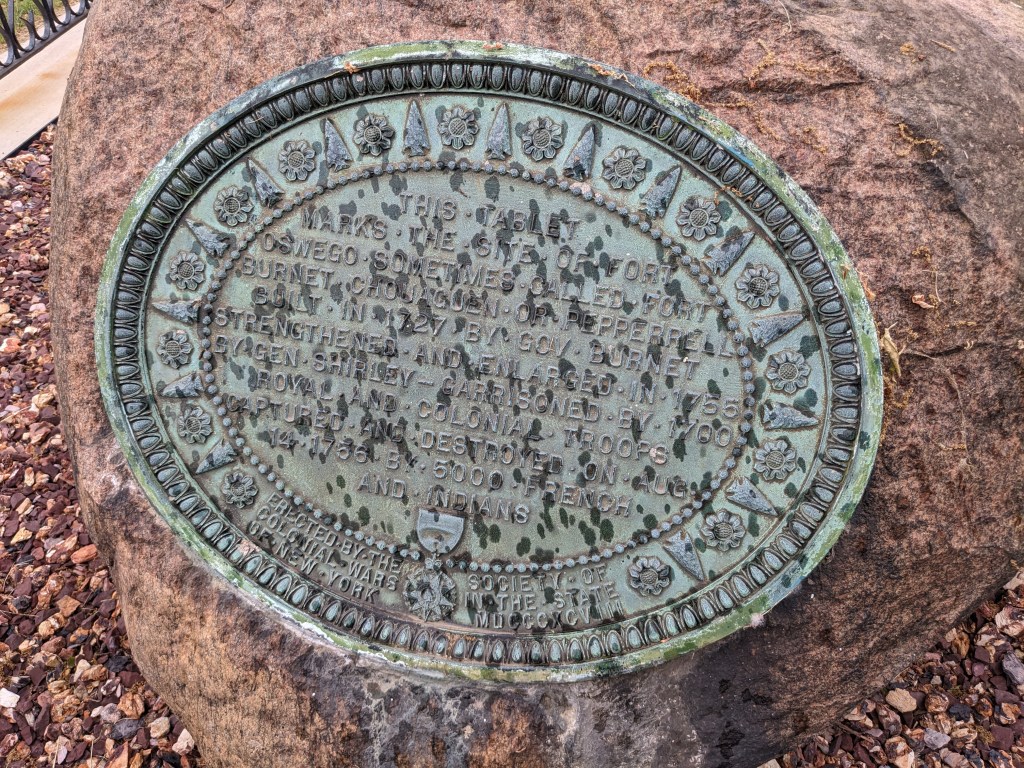


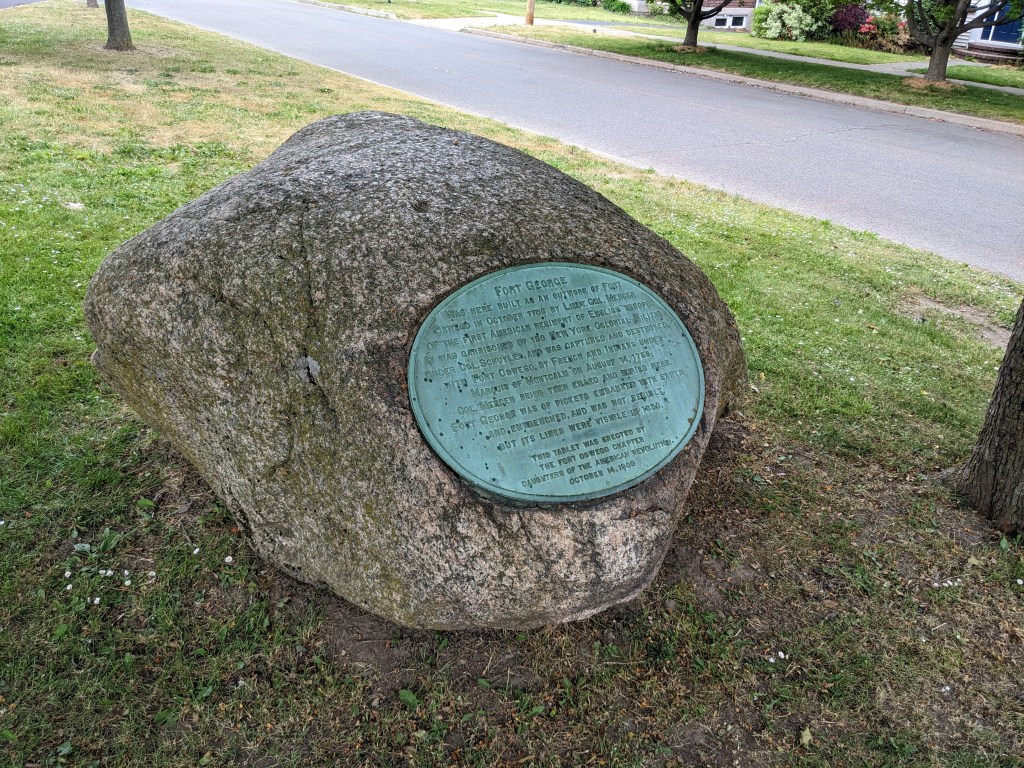
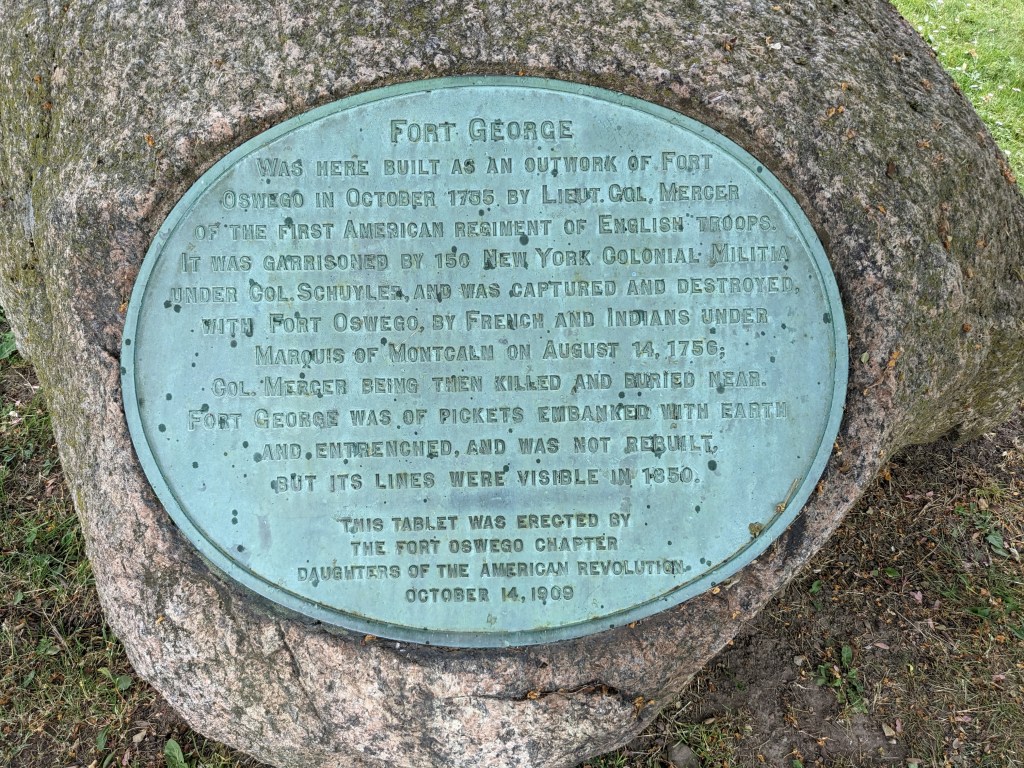
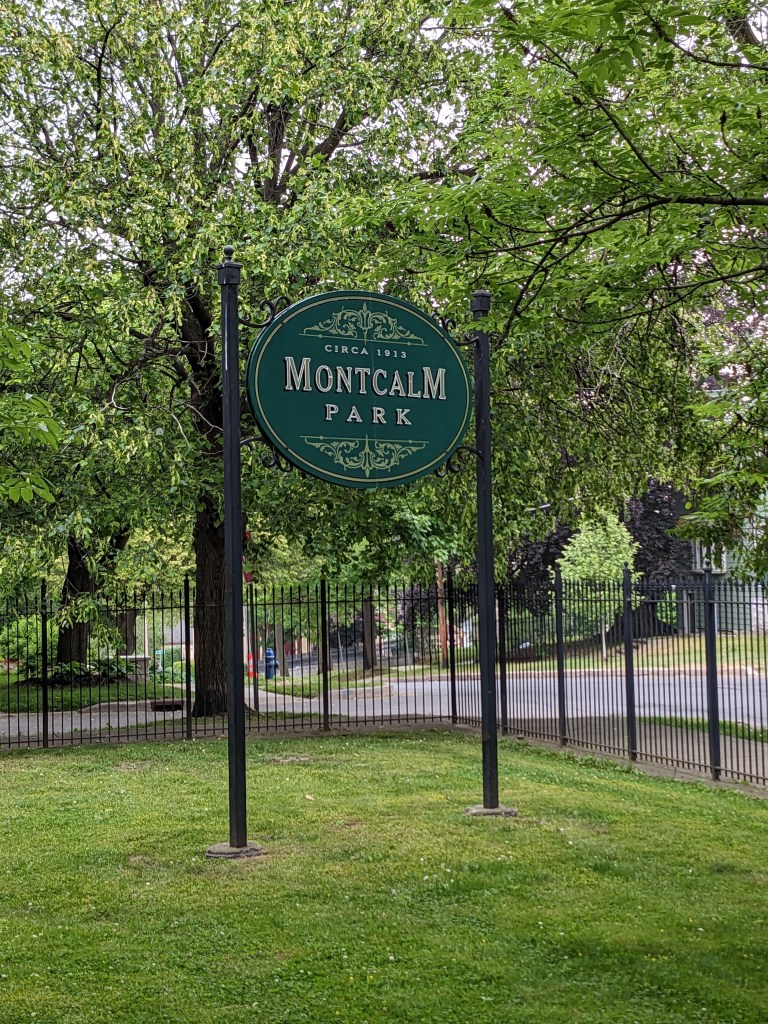
After visiting the site of Fort Oswego, I made the short trek over to a monument marking the site of Fort George, located at the intersection of Montcalm Street and West 6th Street.



 a.k.a. V.J.
Leave a comment