A few years ago, during a family trip to England, we took an excursion out to Stonehenge. The thing about Stonehenge is that the idea of it is a lot cooler than the actual sight of it. As a feat of engineering and construction for its time, Stonehenge is nothing short of an awe-inspiring marvel. But when you get there and see the grouping of stones with your own eyes, it’s smaller than many people imagine and — it pains me to admit — visually underwhelming. In that sense, it has something in common with the Erie Canal.
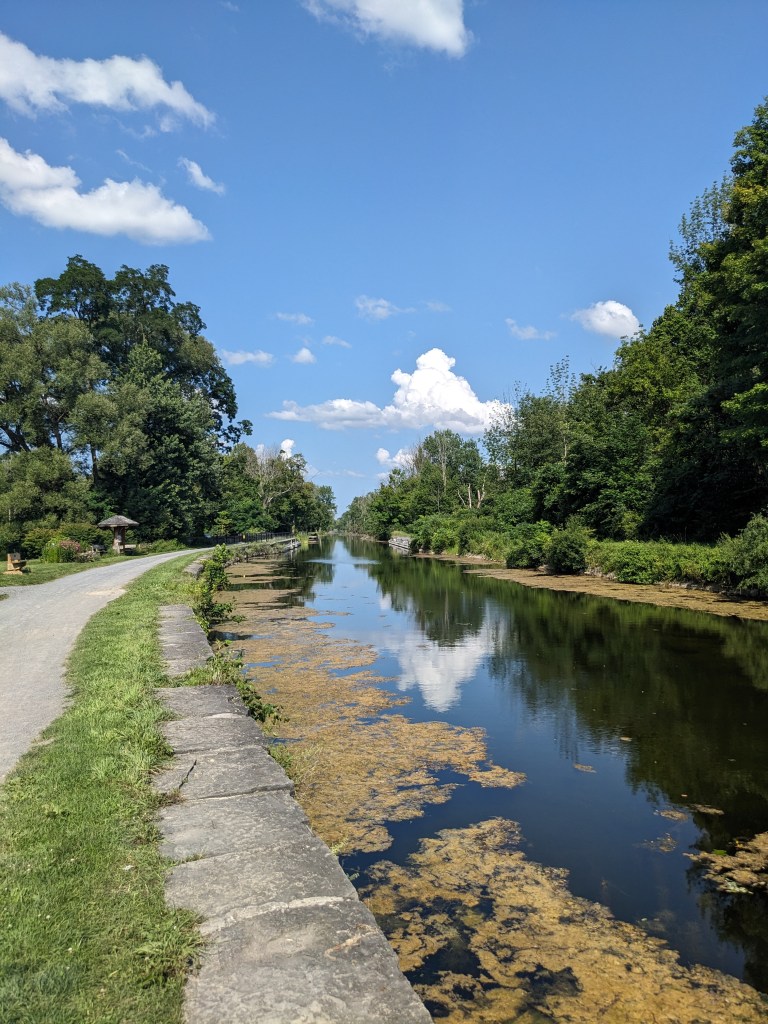
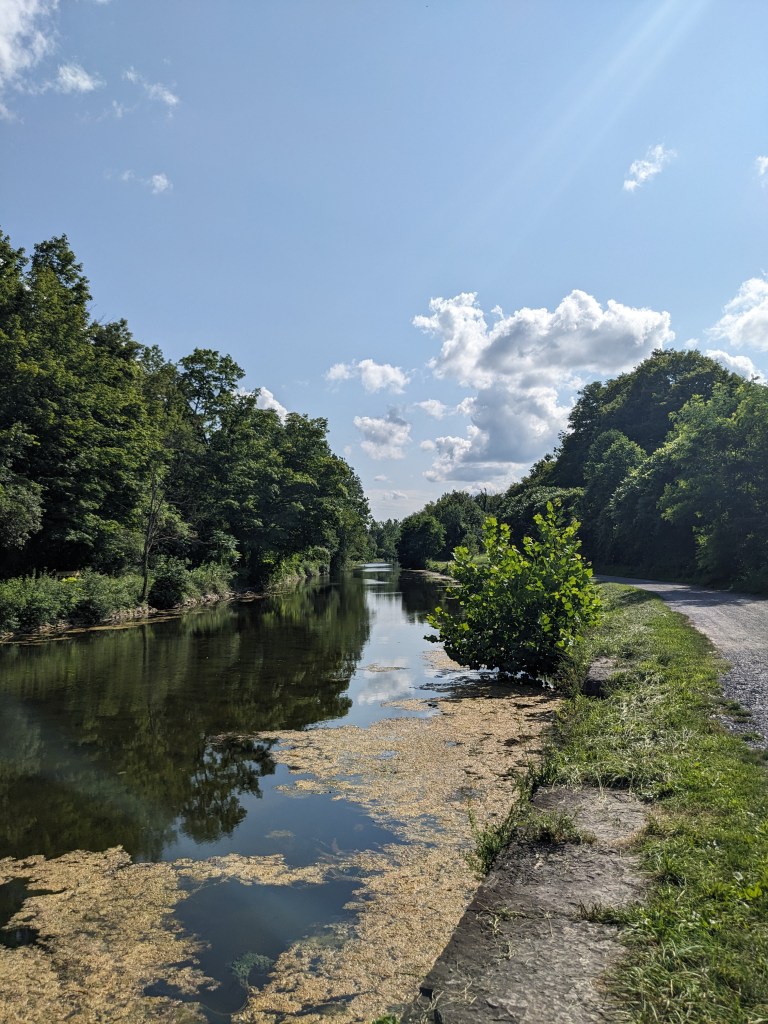
The Erie Canal was an incredible accomplishment of early 19th-century engineering. The story of how it came to be is a fascinating tale of visionaries, adversity, perseverance, and ingenuity. The impact it had on transportation, economic development, and culture of America can’t be overstated. But when one visits the parts of the canal that have been preserved to appear as they did in the 1800s, there’s no getting around the fact that, visually, the Erie Canal was ultimately a ditch filled with dirty water.
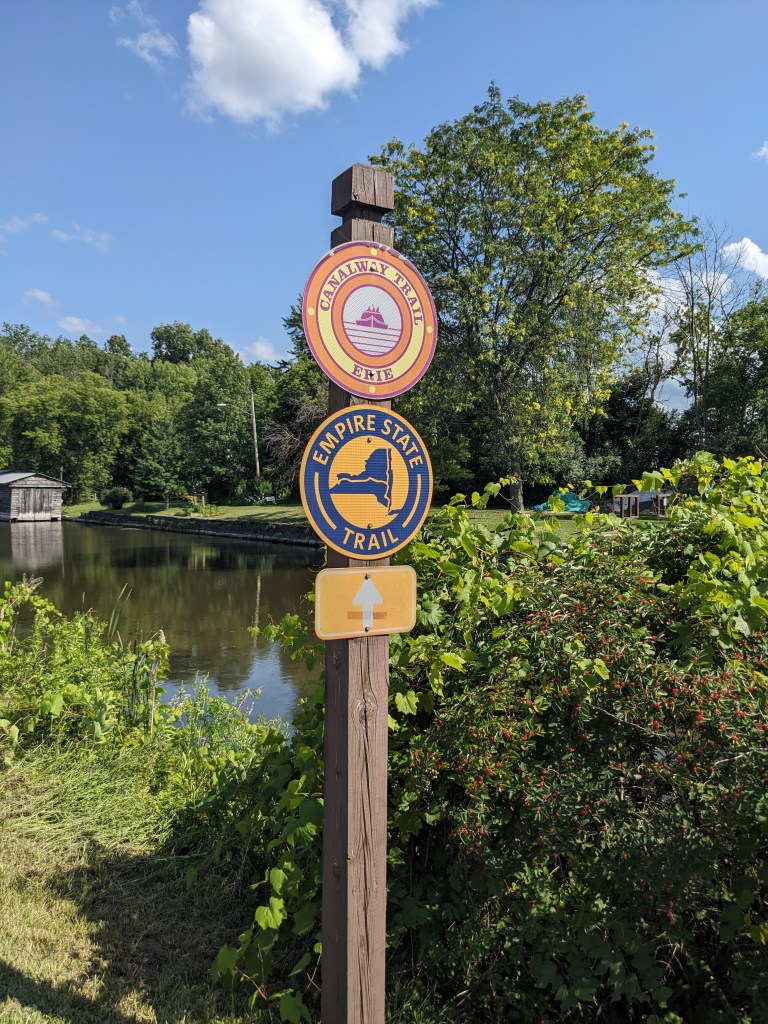
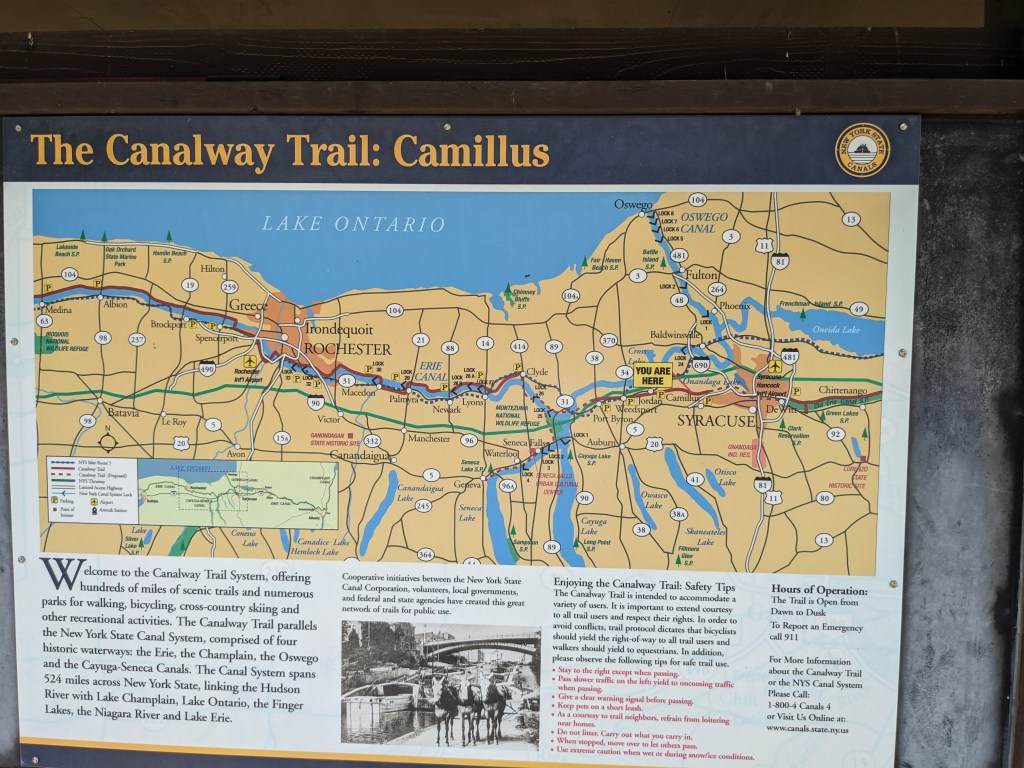
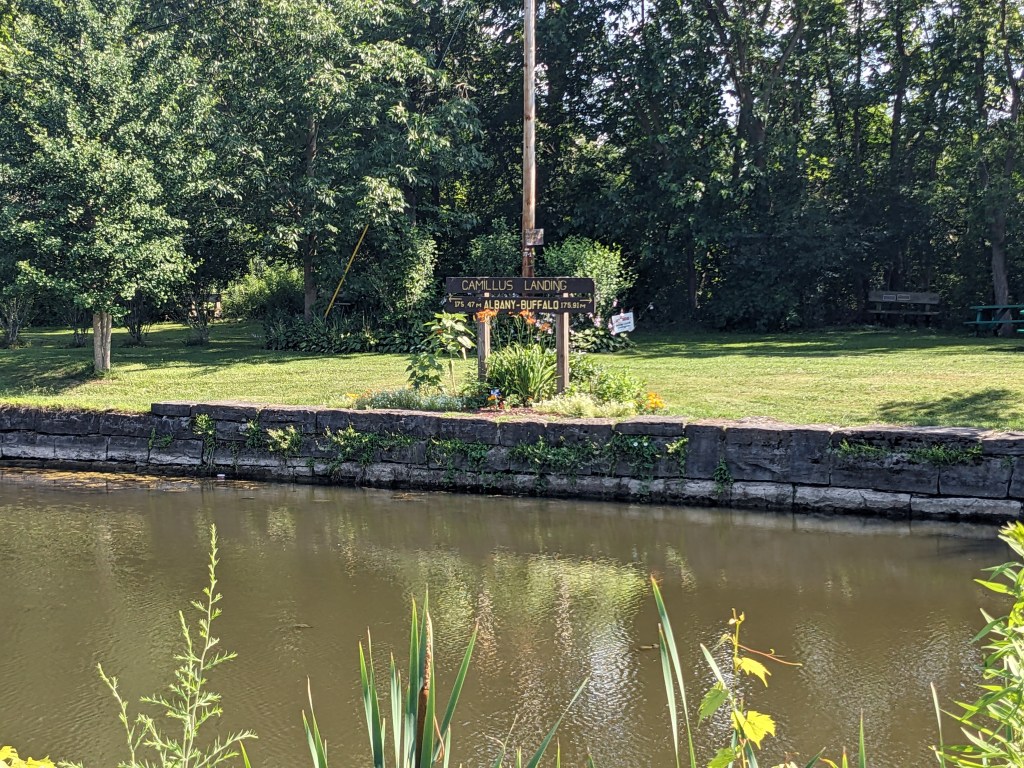
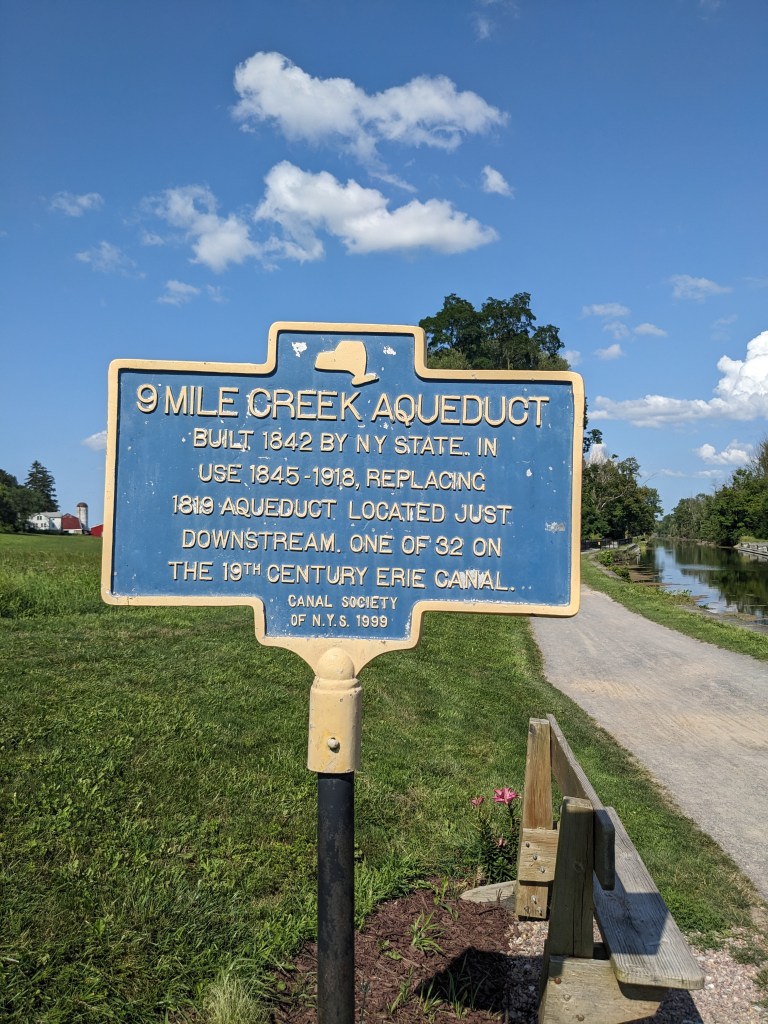
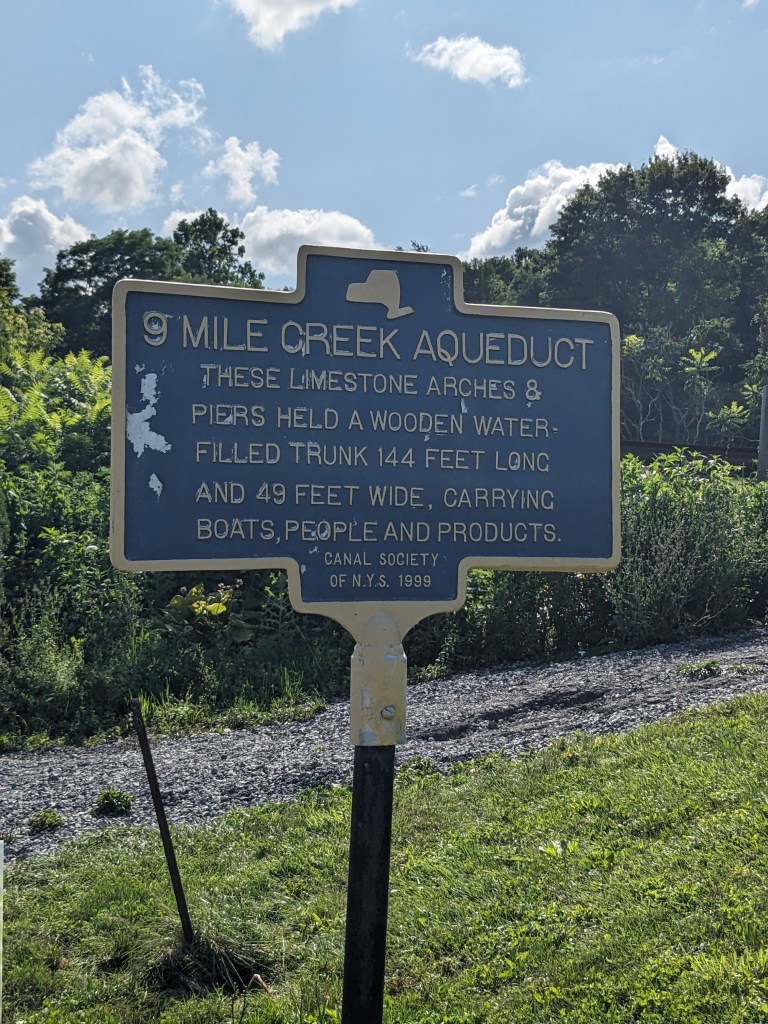
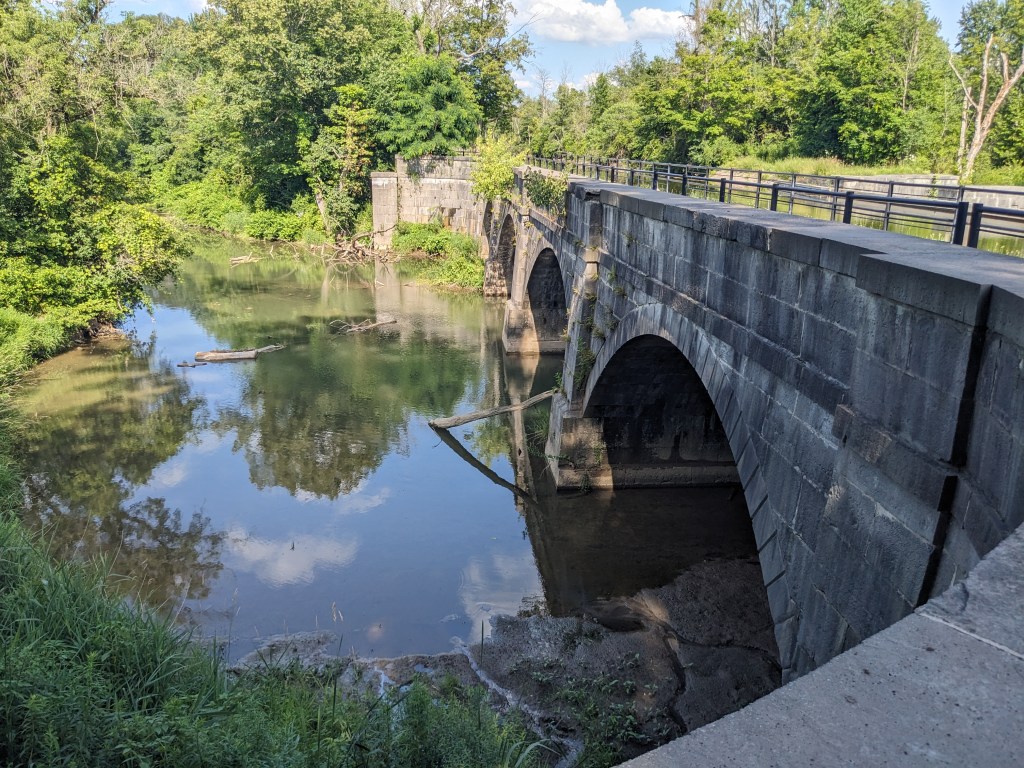
This afternoon after work, I visited a couple points on the Canalway Trail in Camillus, N.Y. (a western suburb of Syracuse). It was an absolutely beautiful, if hot, day. Runners, cyclists, and one angler were enjoying the trail, but it was still quite peaceful. In a few places, the pastoral setting made it easy to imagine that I had been transported back in time to around 1850, when the canal was its heyday.
I took a few photos that don’t require much in the way of context, explanation, or commentary. Like I said, it’s a ditch filled with dirty water.



 a.k.a. V.J.
Leave a comment