One of the formative television shows of my life is The Odd Couple (1970-75). I have memories of watching some original-run episodes with my mother when I was very young. Then, when I was a little older, our cable system featured WPIX, so the reruns were always available to me, and I took full advantage of that. I’ve seen every episode many times over.
I still watch the show on streaming these days and — as is often the case when I watch vintage TV and movies — I’m always keeping a nostalgic eye out for period details: dated decor, obsolete technology like rotary phones, the absence of computers in offices, the cars of the era, hairstyles, and of course the clothes.
Even people who never watched the show understand that The Odd Couple was a study in contrast. The two main characters were presented as opposites. Felix Unger was a neat freak. Felix was a fussy and neurotic perfectionist, but also a refined aesthete who loved the finer things like opera, ballet, and gourmet cooking. Oscar Madison was a slob. He was a degenerate gambler, a junk-food junkie, and, despite his job as a high-profile sports journalist, he was ultimately just a cigar-chomping regular guy.
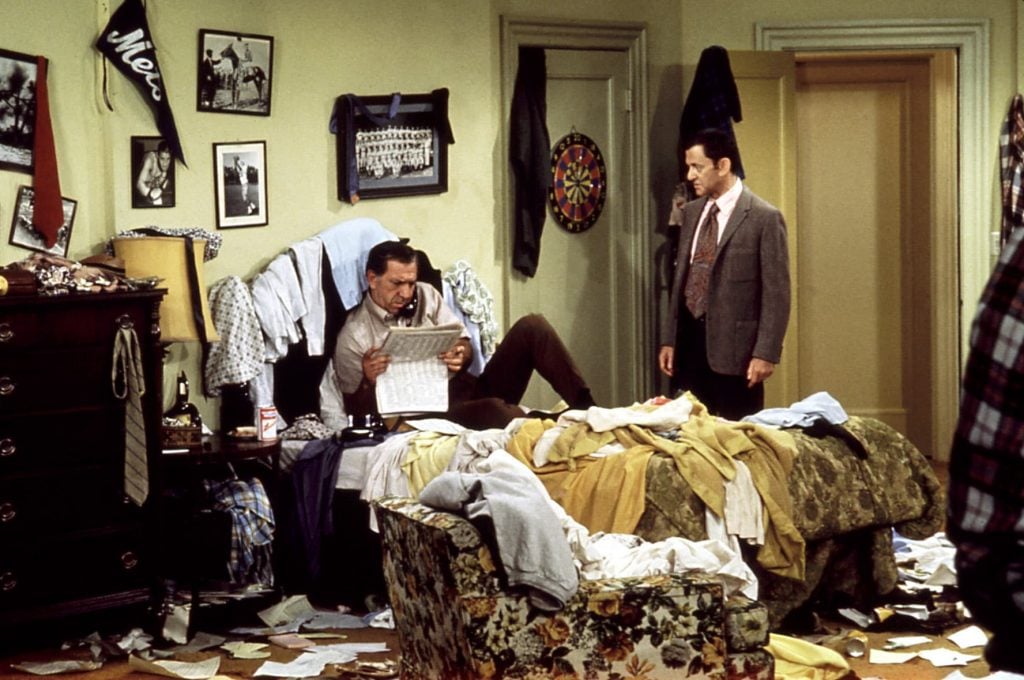
Everything we were shown about the characters reflected those extremes. Felix’s bedroom was neat as a pin while Oscar’s (a masterpiece of set design) was a disaster area. Felix worked in a photography studio where everything was in order. Oscar worked in a dank old newspaper office where his desk was in disarray; and sometimes wrote articles at home where his desk was in disarray. In the early seasons of the show, the wardrobe choices told the story as well. Felix favored well-tailored double-breasted suits, while Oscar could often be seen in a dirty gray sweatsuit and/or a dingy bathrobe with a Mets cap perched on his head at a random angle.


Then, as the show got deeper into the 1970s, a funny thing happened. Oscar started dressing better than Felix. Sure, Oscar was still rumpled, and his clothes looked carelessly thrown on half the time, but in terms of outfit selection, his workaday ensembles showed subtlety, a classic sensibility, and restraint. A man could wear Oscar’s 1974 work outfits to the office in 2023 and nobody would question his sartorial choices.
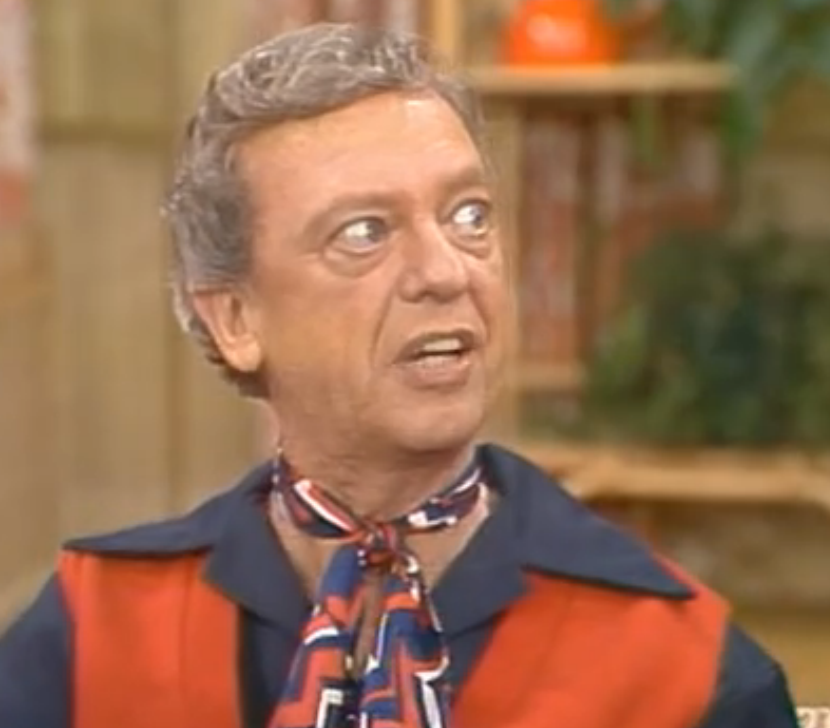
Meanwhile, Felix increasingly embraced the garish excesses that are pretty much synonymous with ’70s fashion trends. Felix wasn’t quite at the same level as WKRP in Cincinnati’s Herb Tarlek or Three’s Company’s Ralph Furley, but in some later-season episodes, he wasn’t far off.
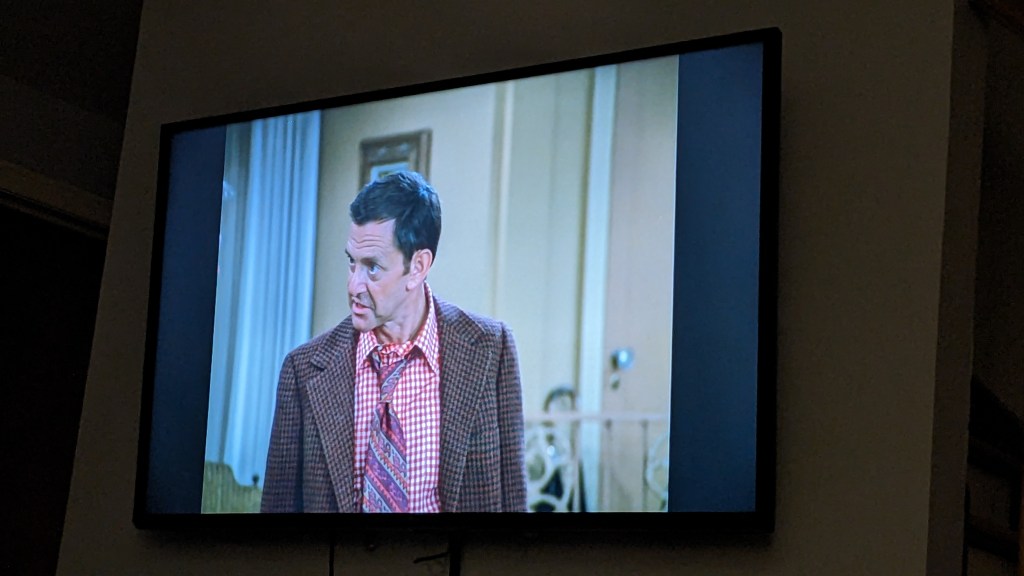

Felix leaned hard into two of the worst menswear trends of the 1970s: massively wide ties featuring loud patterns, and comically huge lapels. The pictures below are just two of many examples.


Another of Felix’s looks that didn’t age well was his tendency to wear bold striped or patterned shirts. They weren’t terrible, but it does seem more like a choice that Oscar, the sportswriter who liked to hang out at horse tracks would have gone for. (I say that as somebody who occasionally went to the horse track with my dad back in the day and remembers how many of the denizens there used to dress.) Instead, Oscar served as a restrained counterbalance to Felix’s loud designs.


It makes a lot of sense that the characters in a show about opposites would contrast in their wardrobes. It just seems to me that, given what we know about the characters, Oscar should have been the one to jump into ’70s fads with gusto, while the persnickety and uptight Felix would have been the guy trying to maintain restraint and standards of taste. In thinking about this paradox, I’ve come up with an in-show universe explanation for the wardrobe choices, and also a real-world hypothesis.
My in-show rationale is that Felix was a photographer who often worked on national advertising campaigns. He was always rubbing elbows with trendy Madison Avenue types and, just for business purposes, might have felt the need to appear younger and more hip than he really was. Meanwhile, Oscar’s tasteful attire was entirely unintentional. He wasn’t trying to look good; it was just a happy accident that the then-out-of-style clothes he was still clinging onto from the mid 1960s aged a lot better to modern eyes than the cutting-edge stuff he was too apathetic/broke/out-of-touch to buy in the early 70s.
The real-world hypothesis is pretty straightforward: Tony Randall and Jack Klugman were stars with the clout to wear whatever they liked on set, and how their respective wardrobes affected characterization wasn’t really considered. In real life, Randall was more of a fashion-forward peacock and Klugman was more of a subdued everyman, so that’s what we saw on the screen.
Whatever the case, I don’t see this wardrobe issue as a flaw. It doesn’t affect my enjoyment of the show in the least. The fact that I’ve given this much thought over such a trivial matter is just proof that the series still has a hold on my imagination. One thing I like about the TV version of The Odd Couple compared to the movie, and (although I’ve never seen it) I imagine the play, is that Randall and Klugman gradually infused parts of their personalities into the roles over time. I assume the clothing choices were just part of that process. Then again, Felix Unger taught me many years ago to never assume…



 a.k.a. V.J.

Leave a comment