Today is America’s birthday. People across the country will celebrate by attending parades, shooting off fireworks, cooking out in the back yard, or maybe going to a baseball game. Regardless of the specific activities one chooses, the general focus of the holiday is on patriotism. Of course, patriotism is an abstract concept that is difficult to define and means different things to different people. And since we live in the 21st century, when everything must necessarily devolve into an ugly, hysterical, binary political debate with pre-packaged rhetoric and canned insults to hurl at each side, the discussion on whether patriotism is a virtue or a vice can be its own minefield.
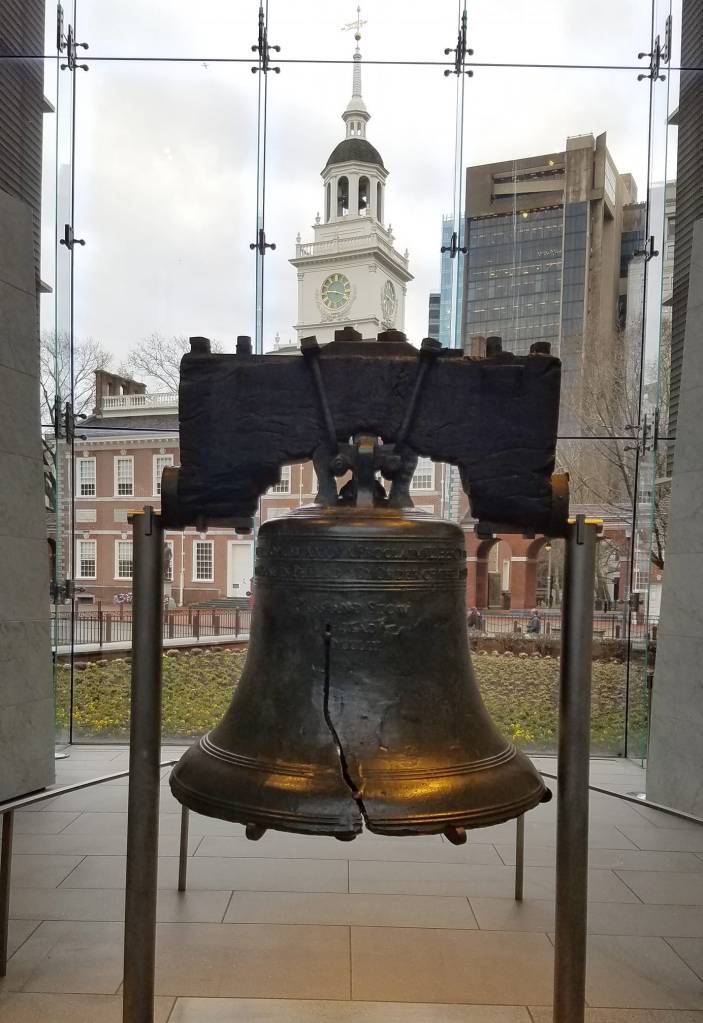
I am not writing this post to offer definitions or to tell anyone how patriotic or skeptical of this country they ought to feel. I will, however, posit a simple argument: No matter how you feel about your country, you should familiarize yourself with its history. If we are marking the 247th birthday of the United States with a national holiday, shouldn’t we all have at least a passing knowledge of the significant events and broad trends that occurred during that time frame (not to mention the century-and-a-half of colonial history prior to 1776)?
If you agree with that basic premise, I have a challenge for you. Don’t worry, this will be ridiculously easy. It won’t cost any money, will take minimal effort, and the time commitment can be as much or as little as you want it to be. Here goes:
I’m guessing that whatever community you live in or work in, there are some historical markers in the area. They might take the form of an inscription on a park monument, a plaque on a public building, or a sign at a remote country crossroads. I’ll grant that the frequency of these markers will depend on your area. When I lived in Massachusetts, it seemed like I ran into a different one every five paces. New York isn’t quite as zealous as the Bay State, but we have plenty of them. That said, I suspect that wherever you live, there are some signs of that sort. I’m also willing to bet that there’s at least one of those markers you pass by regularly that you’ve never stopped to read. The next time you see it, I challenge you to stop to read it.
That’s it. Just take a few seconds to read the marker. Maybe you’ll find it interesting, maybe you won’t. Either way, you’ll know a little bit more about your little corner of America than you did before. If you want to leave it at that, great. Challenge completed. But you may find that you don’t want to leave it at that.
The information you encounter may lead to questions: What impact did that notable person have on the community? Is the historical event cited something you’re proud of or ashamed/angry about? Did the thing really deserve to be commemorated? Why was it important for someone to pass this information down to posterity? Was there some agenda or interest group behind the marker? Do you have reason to doubt the information, as presented or bristle at its presentation? Does the person, place, event, or activity commemorated tie into a broader issue extending far beyond your local community like wars, immigration, slavery, economics, social trends, technology, Native history, political movements, religion, crime, transportation, art, music, etc.? (Spoiler alert: the answer to that last question will be yes.)
Once you’ve pondered those questions, you’ve taken the first step to deeper learning. Look for answers online, at your local library, historical society, or a museum. Keep digging deeper or move onto another marker and repeat the process. However far you go with it, you’ll be better off for the experience.
That’s the extent of my challenge for this Fourth of July and going forward: Simply read a historical marker and use that as a starting point to learn more about your community and, by extension, your nation. Or don’t. It’s a free country.



 a.k.a. V.J.
Leave a comment