One of the great things about baseball is how deeply it is rooted into America’s past. For example, the National League is celebrating its 150th anniversary in 2026. There are current-day MLB teams like the Braves, Reds, and Cubs, that were founded prior to the end of Reconstruction.
The downside of having such a long history is that the legacies of players and managers who were the brightest stars during their eras start to get lost to all but the most dedicated and history-minded fans once those eras are beyond living memory. If you asked a person who was fairly knowledgeable about the game’s history to name an “old-time” baseball player, they might come up with Babe Ruth or, if they go really far back, Ty Cobb. But hardly anyone would (or could) name any of the sport’s greats from the roughly 30 years before Ty Cobb made his Major League debut.
One of those greats from the 19th and early 20th centuries who is not remembered anywhere close to how much he deserves to be is John McGraw (1873-1934). McGraw is considered one of the towering figures of baseball’s “dead-ball era.” That categorization actually sells him short, as his playing career began in 1891 — about a decade before the dead-ball period began; and his managerial career extended to 1932 — about a dozen years past its end.
McGraw’s main legacy is as a manager. He managed the old National League Baltimore Orioles and later the New York Giants — the latter of which he helmed for almost 30 years. His 2,763 managerial wins place him behind only Connie Mack and Tony La Russa. McGraw’s teams won ten pennants. He is also credited with being the mentor to a young Casey Stengel, who of course wound up being a legendary manager in his own right.
McGraw was also a very good third baseman, sometimes serving as a player-manager. His lifetime batting average was .334 and he stole 436 bases over the course of his career. Not too shabby.
John McGraw was posthumously elected to the Baseball Hall of Fame in 1937. Baseball people of that era knew what he contributed to the game; not many people these days do. Just to show how much John McGraw’s star faded over the decades, I submit this data point: McGraw was from a small town called Truxton in Cortland County, N.Y. Truxton is about an hour from my house. Despite that, growing up, I never heard a word about John McGraw or his local connection. The Syracuse-based sports media, which never missed an opportunity to point out that players like Mel Hall, Andy Van Slyke, and Frank DiPino were homegrown CNYers, didn’t talk much about the Hall of Famer and one of the winningest managers of all time who grew up 30 miles south of the Salt City. It wasn’t until just a few years ago when reading about the Orioles of the 1890s that I learned McGraw was a local product.
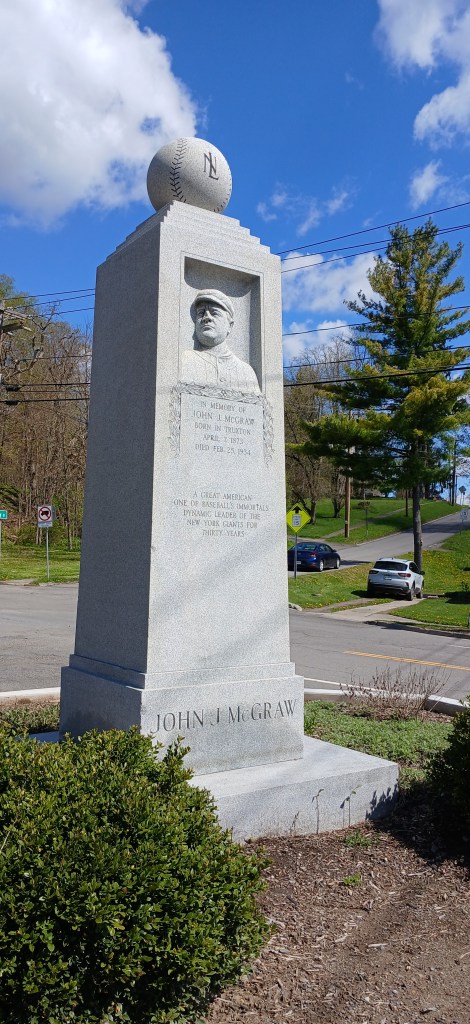
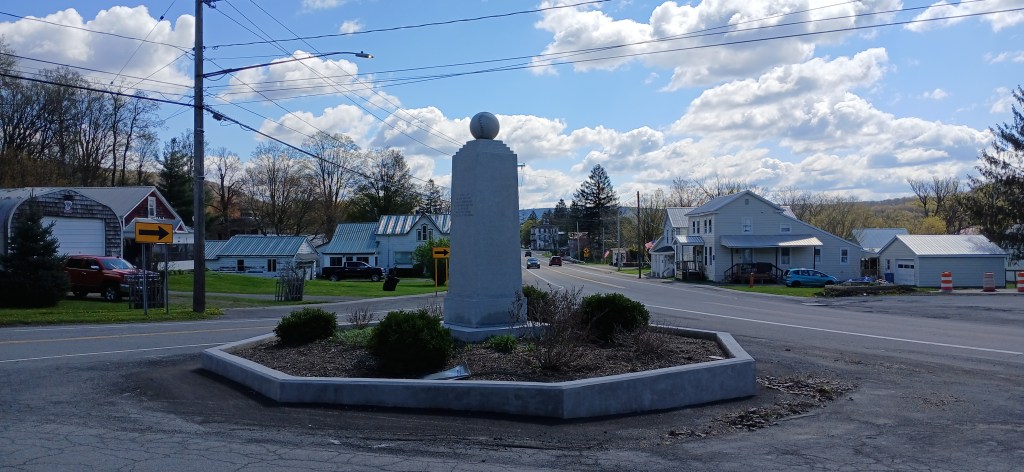
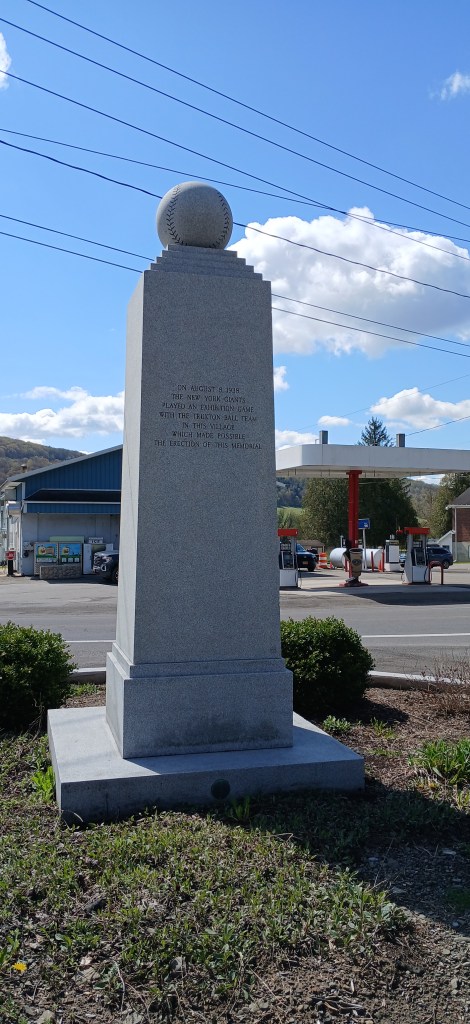
His erasure from the collective memory of the broader region aside, John McGraw is commemorated in Truxton itself with a substantial monument. This weekend, on our way to Tinker Falls, Jen and I made a quick side trip to see the stone marker paying tribute to Central New York’s giant who managed the New York Giants.
Here are the pics:




Leave a Reply